Education is often regarded as the cornerstone of personal development, but its influence extends far beyond the individual. It plays a pivotal role in shaping society, promoting social cohesion, and fostering economic growth. The impact of education on society is profound and multifaceted, affecting social, economic, and cultural dimensions, while also promoting equality and innovation.
Education as a Foundation for Social Development
Education serves as a primary vehicle for social development. By providing individuals with knowledge, critical thinking skills, and moral understanding, it fosters informed citizens who can actively participate in civic life. Literate and educated populations are better equipped to understand societal challenges, contribute to community improvement, and engage in meaningful dialogue about governance and social policies.
Moreover, education promotes social cohesion by bridging gaps between different social groups. It encourages empathy, tolerance, and understanding, reducing prejudice and discrimination. In communities where access to quality education is widespread, people tend to be more aware of human rights and social responsibilities. This shared understanding strengthens societal bonds and encourages collective problem-solving.
Economic Implications of Education
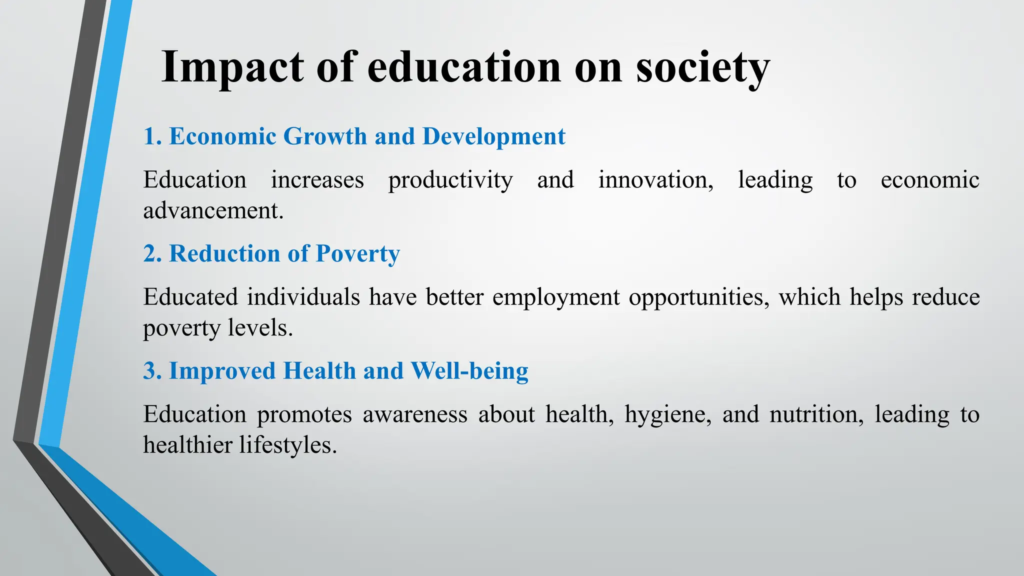
The impact of education on society is particularly evident in economic growth and development. Educated individuals tend to have higher employability, improved productivity, and better opportunities for entrepreneurship. A skilled workforce attracts investment, promotes innovation, and contributes to overall economic stability. Nations that prioritize education often witness higher levels of technological advancement and industrial progress.
Education also plays a crucial role in reducing poverty. By equipping individuals with marketable skills, education empowers people to secure stable employment and improve their standard of living. This economic empowerment does not remain confined to the individual; it benefits families, communities, and entire nations by fostering sustainable development and reducing social inequalities.
Cultural Enrichment and Preservation
Education is a key driver of cultural enrichment and preservation. It enables individuals to understand their own heritage, traditions, and values while also fostering appreciation for diverse cultures. Through exposure to literature, history, arts, and global perspectives, education broadens minds and encourages cultural sensitivity.
Societies that value education often experience a flourishing of creativity and intellectual growth. Educated individuals contribute to the arts, sciences, and humanities, enriching society with innovative ideas and cultural achievements. This continuous exchange of knowledge and creativity ensures that societies remain vibrant and dynamic.
Promoting Health and Well-being
Another significant impact of education on society is its influence on health and well-being. Education equips individuals with knowledge about nutrition, hygiene, disease prevention, and mental health, leading to healthier lifestyles. Educated parents are more likely to prioritize the health and education of their children, creating a positive cycle that benefits future generations.
Public health initiatives are also more effective in educated societies. People with higher levels of education are more likely to understand and adopt preventive measures, support vaccination programs, and engage in healthy behaviors. As a result, education contributes not only to individual well-being but also to public health outcomes and longevity.
Education and Gender Equality
Education plays a transformative role in promoting gender equality. By providing equal access to learning opportunities, societies can empower women and girls, breaking cycles of discrimination and marginalization. Educated women are more likely to participate in the workforce, make informed health decisions, and contribute to economic and social development.
Gender equality in education also strengthens societal structures by promoting inclusive decision-making and reducing social disparities. When both men and women have access to education, societies experience enhanced productivity, innovation, and social harmony.
Fostering Innovation and Progress
Innovation is the lifeblood of societal progress, and education is the key driver behind it. Educated societies are more likely to embrace research, technology, and creative problem-solving. From scientific breakthroughs to technological advancements, education fuels the intellectual capital needed for progress.
Furthermore, education encourages critical thinking and curiosity. These qualities enable individuals to challenge traditional norms, explore new possibilities, and contribute to societal advancement. The cumulative effect is a society that continually evolves, adapts, and thrives in an ever-changing world.
Challenges and the Need for Inclusive Education
Despite its immense benefits, the impact of education on society is contingent upon access, quality, and inclusivity. In many parts of the world, disparities in educational opportunities hinder social development and perpetuate cycles of poverty and inequality. Marginalized communities, rural populations, and underprivileged groups often face barriers that prevent them from receiving quality education.
Addressing these challenges requires policies that promote equitable access, investment in teacher training, infrastructure development, and the integration of technology in learning. Inclusive education ensures that every individual, regardless of background, can contribute to societal growth and prosperity.
Conclusion
The impact of education on society is undeniable. It serves as a catalyst for social cohesion, economic prosperity, cultural enrichment, health improvement, gender equality, and innovation. Educated societies are better equipped to face global challenges, adapt to change, and create sustainable development.
Investing in education is not merely a moral or ethical choice; it is a strategic imperative for building strong, resilient, and thriving societies. By prioritizing education, societies lay the groundwork for progress that benefits both current and future generations. The profound influence of education resonates across every facet of life, proving that the true power of learning extends far beyond the classroom.
